
Water Damage
Fast response to leaks and flooding to stop and reverse the damage.
Water never waits for a convenient time. A pipe lets go at midnight, a water heater fails while you are at work, or a storm pushes water under the door, and every hour the damage spreads further into floors, walls, and belongings. Terracotta Construction answers water emergencies around the clock, stops the source, pulls out the water and ruined material, dries the structure, and rebuilds. We are locally owned in Montgomery, Texas, licensed and insured, and estimates are free.
What Water Damage Response Covers and Who Needs It
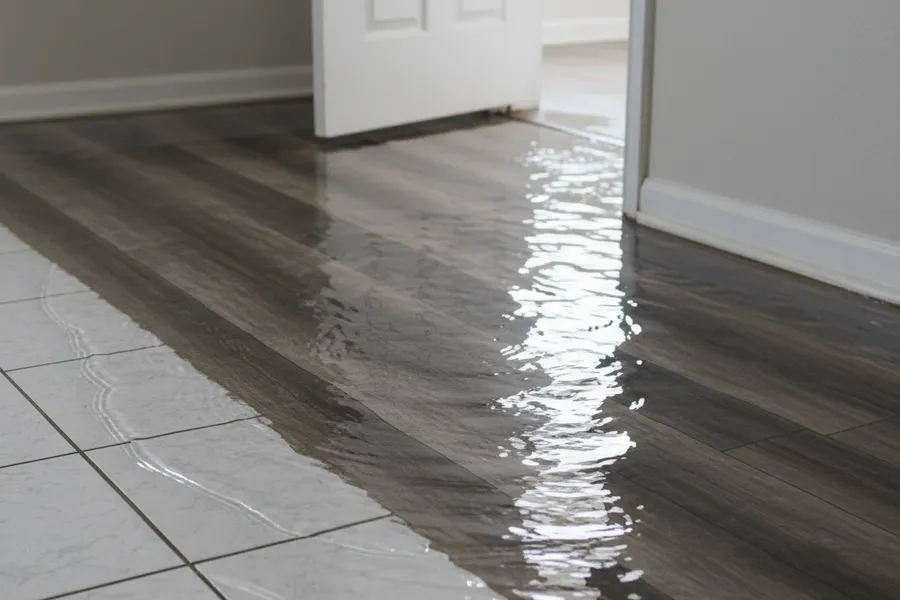
Water damage response is the work of containing an active water problem and reversing the damage it leaves behind. That covers the full arc of an emergency, from shutting off the source and removing standing water to tearing out soaked materials, drying what stays, and repairing the structure so the space is whole again. The faster that arc gets moving, the less damage you are left paying to fix, which is why this is an around-the-clock service rather than something that waits for business hours.
Homeowners call us for burst and frozen pipes, supply lines that fail behind a washing machine or under a sink, water heaters that rupture, overflowing tubs and toilets, roof leaks during a storm, and rising water that gets into a home. In this part of Texas, heavy rain and the occasional hard freeze both do their share of damage, and a slow leak hidden inside a wall can soak framing for weeks before anyone notices a stain or smells something musty.
Businesses, landlords, and property managers need rapid response just as much. A flooded retail floor, a burst line above a leased office, or a water event in an occupied apartment all carry pressure to act fast and limit the disruption. Whether the building is a single-family home, a rental unit being turned over, or a commercial space that needs to reopen, we treat the emergency the same way: stop it, dry it, and put it back right.
Stopping the Source and Containing the Spread
Nothing else matters until the water stops flowing, so the first job on any call is finding the source and shutting it down. That can mean closing a fixture valve, hitting the main shutoff for the building, capping a failed supply line, or isolating a section of plumbing so the rest of the home or business keeps running. With a roof or storm leak we work to divert and slow the intrusion while we set up to handle what has already come in.
Once the flow is under control, containment keeps a bad situation from getting worse. Water travels fast and follows gravity, slipping under walls, wicking up into drywall, and running into rooms far from where it started. We move quickly to confine it, protect dry areas, and keep moisture from reaching electronics, cabinetry, and anything else that has not been touched yet. Standing water also carries safety concerns, from electrical hazards to contamination depending on where it came from, and we handle the scene with that in mind.
Time is the variable that decides how big this job becomes. Clean water that sits starts breaking down materials within hours, and given a day or two the conditions that grow mold are already in place. Because we respond 24/7, we can get a containment effort moving while the problem is still small instead of waiting for it to soak deeper into the structure overnight.
Water Removal, Tear-Out, and Structural Drying
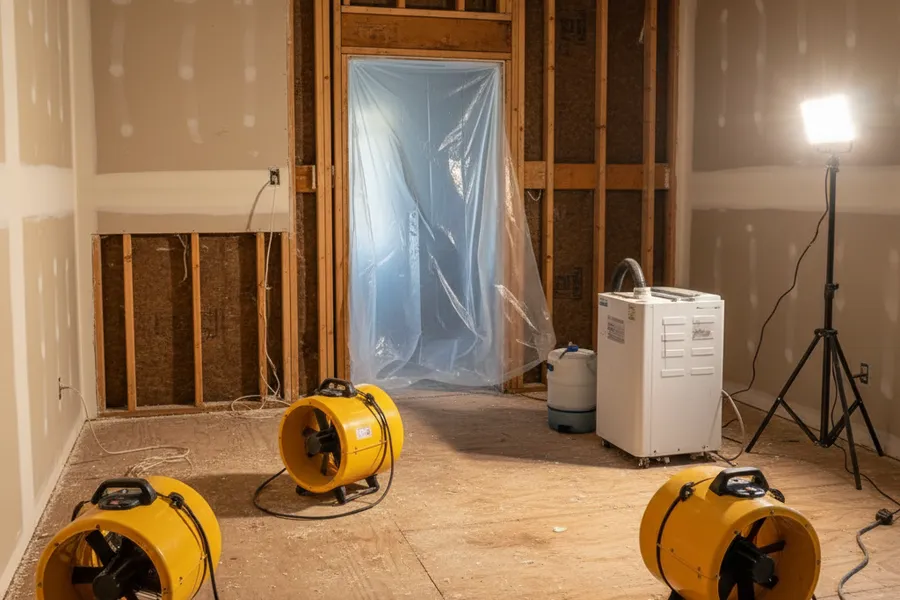
With the source stopped, we extract the water. Standing water gets pumped and vacuumed out, and then the real work begins, because the moisture left behind in materials is what causes the lasting damage. We assess what can be dried and saved and what has to come out. Carpet pad that has wicked up water, swollen baseboards, soaked insulation, and drywall that has lost its strength generally need to be removed rather than dried in place, since trapped moisture invites mold and rot no matter how good the surface looks afterward.
Tear-out is done deliberately, not destructively. We cut back wet drywall to a clean line above the moisture, pull out saturated insulation, and lift flooring and pad where the water got under it, opening up wall and floor cavities so the framing underneath can actually dry. We use moisture readings to find where the water traveled, because the stain you can see is rarely the full extent of where the water went.
Then we dry the structure properly. Commercial air movers and dehumidifiers pull moisture out of framing, subfloor, and the materials that stayed, and we monitor the readings over the days it takes rather than guessing by feel. Drying is the step that is easiest to cut short and the one that causes the most callbacks when it is rushed, because framing that looks dry on the surface can still hold enough moisture to warp wood and feed mold weeks later.
Repairs and Insurance Documentation
Once the structure reads dry, we put the space back together. That can mean hanging and finishing new drywall, replacing insulation and baseboards, repairing or replacing flooring, repainting, and handling the trim and finish work that returns a room to how it looked before the water got in. Because we are a full construction and property-services company, the same crews that handled the emergency can carry the job through the rebuild, so you are not left coordinating between a cleanup company and a separate contractor.
We also document the damage as we go, which matters when a water loss is going through insurance. We record the source and the affected areas, take photos before and during the work, and keep track of what was removed and why. Clear documentation supports your claim and gives your adjuster the information they need, and we are glad to work alongside that process so the repair and the paperwork line up.
We do want to be straight about what we are and are not. We are licensed and insured contractors who handle the emergency response, drying, and rebuild. We do not control how an insurance company adjusts or pays a claim, and we will never tell you we can promise an outcome with your insurer. What we can promise is honest work, a clear record of what we did, and a finished repair that is built to last.
Why Handling Water Damage the Right Way Matters
Water damage is the kind of problem where shortcuts stay hidden until they turn into something worse. Pumping out the visible water and drying the surface might look like a finished job, but moisture trapped inside a wall cavity or under a floor keeps working long after everyone has gone home. That is how a manageable leak becomes warped framing, buckled flooring, and a mold problem that is far more expensive and disruptive to deal with than the original water.
Doing it right means treating the moisture you cannot see as seriously as the water you can. We use readings instead of guesses to confirm where the water went and to confirm the structure is actually dry before we close anything back up. We remove materials that cannot be safely saved rather than sealing damage behind fresh paint, and we use quality materials on the rebuild so the repair holds up to the humidity this region throws at it.
Our crews are experienced, and we stand behind the work with a satisfaction guarantee. Being licensed and insured means you and your property are protected while we are on site, and being locally owned in Montgomery means we are accountable to the neighbors and businesses we serve. When you are dealing with the stress of a flooded home or a soaked storefront, that accountability is worth as much as the equipment.
Free Estimates and 24/7 Response Across Montgomery County and Greater Houston
A water emergency is not something to sit on, and you do not have to face it alone. Whether it is a burst pipe in the middle of the night, a slow leak you just discovered behind a wall, or storm water that got into your home or business, Terracotta Construction is ready to respond. We serve homeowners, landlords, and businesses throughout Montgomery County and the Greater Houston area, including Montgomery, Conroe, The Woodlands, Magnolia, Willis, Huntsville, Tomball, Spring, Cypress, and Katy.
If water is actively coming in, call us right away at (936) 955-4083 so we can get the source stopped and the drying started. For damage that is already contained, we will set up a free estimate, walk the affected areas with you, and lay out what the cleanup and repair involve. We are local, available around the clock, licensed and insured, and we use quality materials on every job, backed by our satisfaction guarantee. Reach out and let us get your property dried out and rebuilt.
Water Damage FAQs
How fast can you respond to a water emergency?+
We respond around the clock, because water damage gets worse by the hour. When water is actively coming in, the priority is stopping the source and starting extraction as quickly as possible. Call us at (936) 955-4083 and tell us what is happening, and we will move to contain it and get the drying underway.
What should I do before your crew arrives?+
If you can do it safely, shut off the water at the source or the main valve to stop the flow, and stay away from standing water near outlets or electrical panels. Move anything you can lift out of the water if it is safe to do so. Do not run electronics in a wet area. Then call us and we will take it from there.
Do you just dry it, or do you handle the repairs too?+
We handle both. As a full construction and property-services company, the same crews that stop the source, remove the water, and dry the structure can carry the job through the rebuild, including drywall, baseboards, flooring, and paint. You are not left coordinating between a cleanup crew and a separate contractor.
Why does soaked drywall or flooring have to be removed instead of dried?+
Some materials lose their strength once they are saturated and will trap moisture even after the surface feels dry, which invites mold and rot. We use moisture readings to decide what can be safely dried in place and what needs to come out, then cut back to clean, dry material so the repair lasts instead of failing again later.
Will you work with my insurance?+
Yes. We document the source, the affected areas, and what we remove, and we take photos before and during the work so your claim is supported. We are glad to work alongside your insurance process. We are honest about our role, though: we handle the response and repair, and we cannot control how an insurer adjusts or pays a claim.
How long does drying out a water-damaged area take?+
It depends on how much water there was, how far it traveled, and what materials were affected, but structural drying typically runs several days with air movers and dehumidifiers running. We monitor moisture readings rather than guessing, and we do not close anything back up until the structure reads dry, because rushing this step is what causes problems down the road.
More Emergency Services
Need Water Damage?
Get a free, no-obligation estimate from a licensed, insured local crew.